You take a good photograph and someone says you should offer sessions.
You make a cake and someone asks whether you’ve thought about taking orders.
You arrange flowers for the table and someone says, “You could sell those.”
Usually, it’s meant kindly. Someone sees something you’re good at and wants you to know it has value.
But it’s interesting how quickly we reach for money to prove that.
You enjoyed making something. Now we’re discussing your availability.
I own a scent business. I understand the pleasure of making something people want to bring home. I also know that taking payment changes the arrangement. There are costs, expectations, deadlines, and work that needs doing whether you feel inspired or not.
I chose those responsibilities. Choosing them for one part of my life doesn’t mean every other interest needs its own set.
Being good at something doesn’t create an obligation to make yourself useful through it.
And sometimes, before we even get to being good, there’s a much more tender question.
What would I like to try?
Finding your way into something
It can be surprisingly difficult to answer that as an adult.
You may know exactly what everyone needs from you and have very little idea what you’d choose for a free afternoon. Maybe the things you used to enjoy no longer fit. The friends you did them with have moved. Your body, budget, schedule, or interests have changed.
Or you’re curious about something entirely new and feel faintly ridiculous admitting it.
You’d like to learn to dance. You’d like to sing with other people. You’d like to be someone who goes out on a Wednesday evening and comes home with something to tell.
Then you look at a registration page and wonder whether everyone will already know each other.
“Just join a club” skips quite a lot.
There’s the cost. The time. Getting yourself out the door after a full day. Walking into a room alone. Being a beginner when you spend so much of your life being expected to know what you’re doing.
And sometimes there’s the vulnerability of wanting company. Of hoping someone might be pleased to see you next week.
I think we can be more generous about how much that asks of a person.
The experience itself

In chapter eleven of The Picture of Dorian Gray, Oscar Wilde writes:
“Its aim, indeed, was to be experience itself, and not the fruits of experience, sweet or bitter as they might be.”
Dorian is a questionable person to consult about how to live. His pursuit of sensation gives us plenty to be uneasy about. Still, that sentence spoke to me.
The experience itself.
An evening can matter before we know what it will lead to.
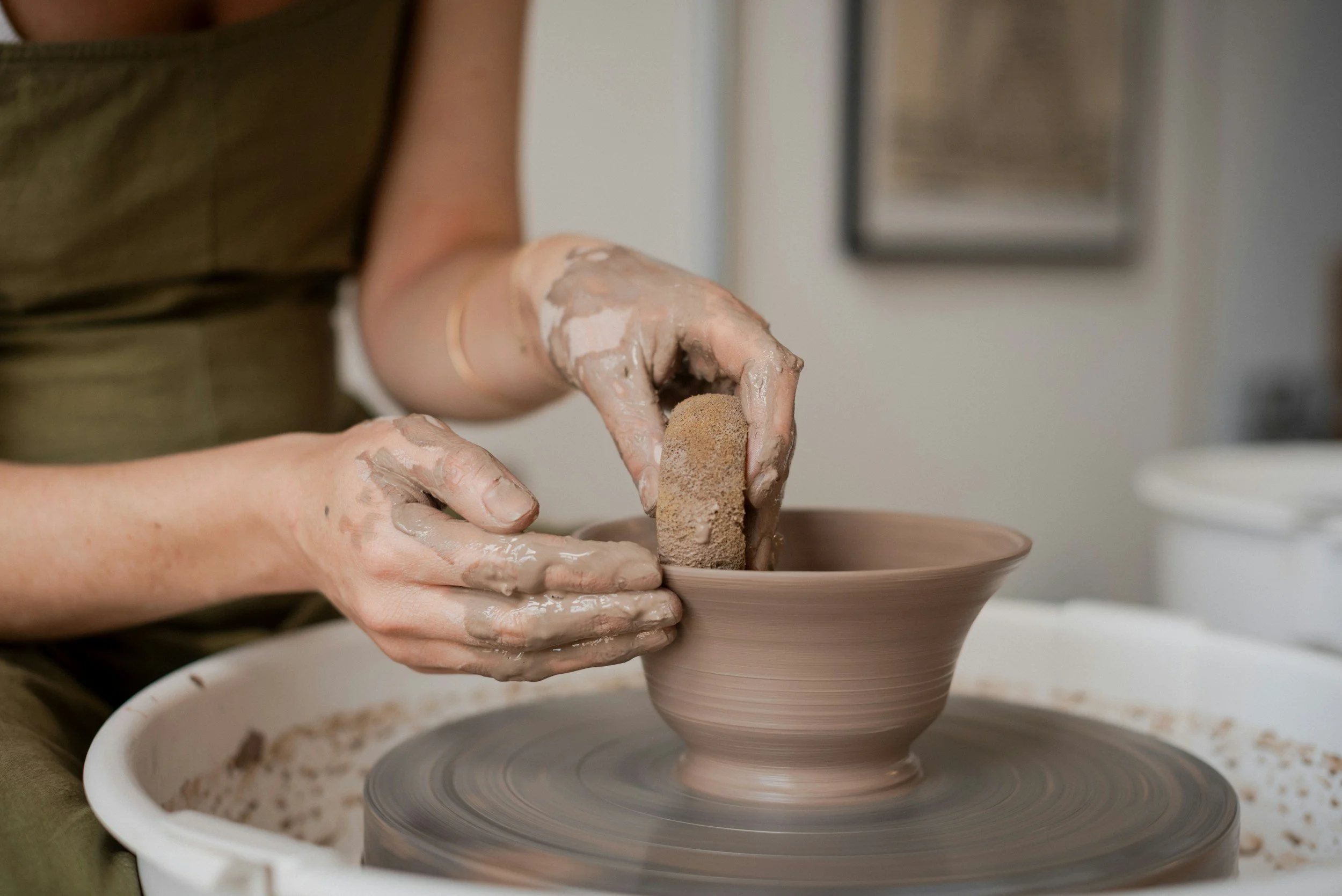
You can spend two hours learning to throw clay and leave with nothing worth putting on a shelf. You can go to a film screening and speak to nobody, but hear a discussion that changes how you see the ending. You can turn up to a class, feel awkward, and also have a moment when you forget to feel awkward because you’re interested.
Those evenings count.
We’re so used to asking what an activity will do for us. Improve our fitness. Develop a skill. Expand our network. Even rest gets justified through how much more effectively we’ll work afterwards.
There’s room to ask whether we might enjoy being there.
Things you might want to do next Thursday

As a recreation therapist I need to provide some more inviting options for adults than a vague instruction to find a hobby.
Something specific enough to picture yourself doing. Something you can be curious about before you’ve decided whether it’s yours.
Try a pottery or printmaking class. Spend an evening finding out what your hands can do with an unfamiliar material. Make a bowl with questionable proportions. Eat olives out of it anyway.
Learn to mix music or play an instrument. Find out how two songs fit together. Learn the bass line you’ve loved for twenty years. Enjoy the sound before deciding whether anyone else needs to hear it.
Try tap dancing, fencing, rowing, or curling. There are so many ways to move beyond the ones we’ve already tried. Sometimes you want to be on the water. Sometimes you want shoes that make noise.
Join a choir or a community theatre group. Sing beside someone. Help build a set. Get to know people while you’re all trying to make the same thing happen.
Go birding or learn a few constellations. Find out who is making all that noise outside, or what you’ve been looking at above your roof. Follow a curiosity that takes you out of your usual route.
Make a zine or learn bookbinding. Put your photographs, collages, drawings, or extremely specific opinions on paper. Make three copies. That can be the entire print run.
Find a film series, reading group, or public lecture. Spend time around people who are interested in something you’d like to know more about. You’re allowed to attend without having something impressive to contribute.
Start a small recurring invitation. A Sunday photograph walk. An album listened to all the way through. A monthly film chosen in turns. Invite someone you’d like to know better. Two people is enough to begin.
Some of these cost money. Some can begin with a library book, borrowed equipment, or something you already own. An introductory session can be enough to find out whether you’d like another.
You don’t have to furnish an entire identity around an interest before trying it.
Making room for familiarity

Friendship is part of this, too.
I wish there were a less exposed way to say, “I’d like some more people in my life.”
A shared activity can give that wish somewhere to go. There’s something to talk about before you know much about each other. Something to return to. A reason to remember a name.
Maybe the first week you only say hello. Later, you ask how something went. Eventually, there’s someone you expect to see, and a conversation you pick up where you left it.
It won’t happen in every room. Some groups won’t feel right. You might enjoy an activity without finding a friend there, or meet someone you like while discovering you have absolutely no future in pottery (that is one thing I tried really hard at and was also so, so terrible at).
You’re allowed to keep looking.
You’re also allowed to enjoy something alone. Company can be a lovely part of pleasure without becoming another result every outing has to deliver.
The joy of becoming

We talk so much about finding ourselves that it can sound as though the task is to recover a person we used to be.
I’m interested in who we haven’t met yet.
The version of you who discovers she likes cold mornings on the water. Who gets very particular about a film director. Who starts recognizing birds by their calls. Who has a friend she didn’t know a year ago.
You can love parts of your life and still want something new to happen in it.
You can have responsibilities and an appetite for experiences you haven’t had.
And you can change your mind along the way. An interest can belong to a season of your life without having failed to become a lifelong passion.
There is pleasure in discovering a preference you didn’t know you had. In looking forward to something. In realizing that, even now, you can surprise yourself.
You do not need to become employable at everything you enjoy.
There is a whole life to become acquainted with.
And you are still becoming.
Quotation: Oscar Wilde, The Picture of Dorian Gray, chapter XI. Read the text