saying the quiet parts out loud
Candles, materials, and what “better for the environment” actually means.
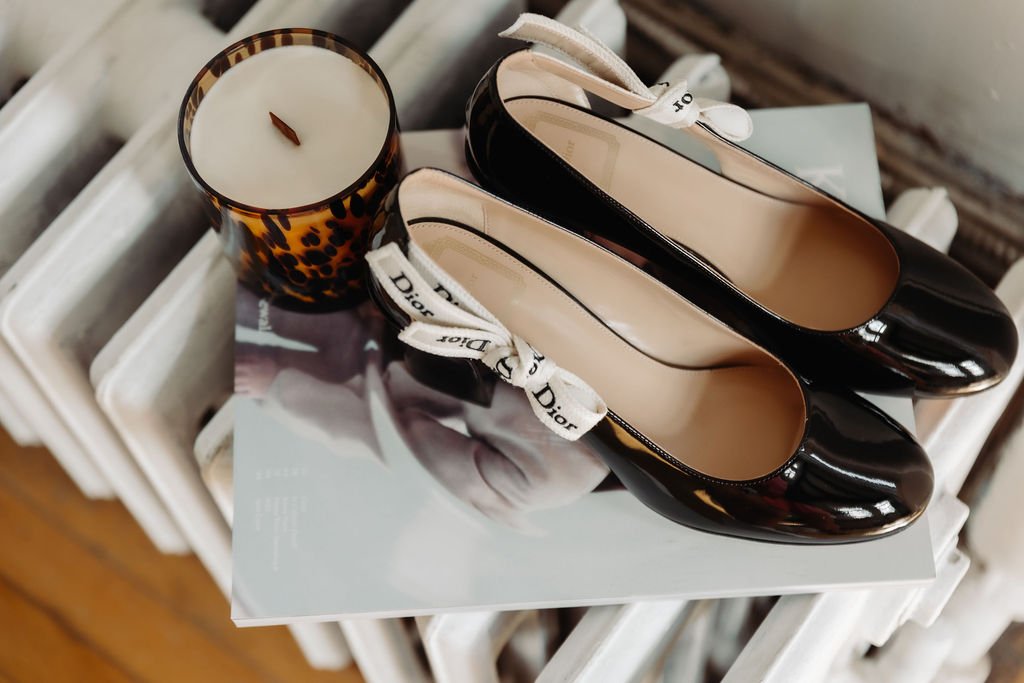
We all love candles. That is why we are here.
The fragrance we return to. The light at the end of the day. A vessel we chose because we wanted to live with it. I make candles because I think these things have a place in our homes, and I enjoy them for the same reasons you do.
That shared affection gives us a good place to begin an honest conversation about what goes into making them.
A candle can be made from a renewable crop, poured into a reusable vessel and still carry environmental costs that the label does not show. Its materials have been grown, extracted, processed and transported. Someone has made the vessel, manufactured the wick, formulated the fragrance, melted the wax and packed the finished product. Then we burn it, clean it and decide what happens to what remains.
Some of those parts are easier to talk about than others. “Natural”, “recyclable” and “designed to last” are appealing descriptions. The land used to grow the wax, the energy used to make the vessel and the difficulty of disposing of a liner tend to receive less attention.
I think we can say those quiet parts out loud. Including the ones that apply to what I make.
Knowing more gives us something useful: a better understanding of our choices. We can ask what a claim means, decide which trade-offs matter to us and choose a candle or refill system we will actually enjoy using.
There is no impact-free candle. There are materials with benefits and drawbacks, different ways to keep them in use, and practical decisions that can reduce waste.
So let’s look at the whole picture, from before the first flame to what happens after the last one.
Before the first flame
The environmental footprint of a candle includes more than the object left on the shelf. It includes raw materials, manufacturing energy, water, transport, packaging, burning and disposal. A lifecycle assessment considers the relevant stages together and states what it includes and leaves out. [1, 11]
Even research has boundaries. One candle study might assess climate emissions; another might examine indoor particles. Neither, by itself, tells us everything about biodiversity, waste, worker conditions or recyclability.
“Better for the environment” needs a comparison. Better than buying a new vessel every time? Better over four candles or forty? Better for carbon emissions, or for reducing discarded containers?
Then there is the question of how much candle use we are comparing. Four small candles and four large candles may contain different amounts of wax and provide different burn times. Counting purchases alone does not make them equivalent.
A fair assessment needs to define what each system provides: for example, a stated number of hours of candle use under comparable conditions, with the materials, replacements, cleaning and transport needed to deliver it. Fragrance performance and the way someone actually uses a candle may matter to that comparison too.
In other words: better than what, and for how much use?
A glass-insert system may suit someone who wants straightforward replacement or scent changes while keeping an outer vessel. The inner glass holds the candle separately. A replacement glass container arrives with each refill purchase, but that does not necessarily mean a newly manufactured jar is required each time.
Last Candle Co. offers a useful example. Its stone vessels receive glass candle inserts, and its return programme asks customers to collect five used inserts and contact the company for a return shipping label. The company says it washes and refills returned jars that arrive undamaged. [19]
Although the programme is called recycling, the process described is reuse: keeping the existing glass container in service rather than melting it down to make new glass.
That changes the comparison. A glass-insert system with a functioning return-and-reuse programme needs to be assessed differently from one in which every insert is discarded. It can keep both the decorative exterior and the inner glass in use. The practical questions become how many customers return their inserts, how many cycles the jars complete, and what transport, protective packaging and cleaning those returns require. The existence of a programme does not, by itself, tell us its environmental savings.
For a buyer, the choice may come down to how they prefer to refill: cleaning and inserting wax at home, releasing wax from a reusable liner, or collecting glass inserts for return. Ease of use matters when it helps a system stay in use.
There is no responsible environmental ranking based solely on those three descriptions. Vessel weight, recycled content, liner life, refill packaging, cleaning, transport and the number of actual uses all matter. These are considerations for a comparison, not a completed calculation.
The wax is a resource too

Wax is the candle’s fuel. Its origin matters, and so does what happens when it burns.
Paraffin comes from petroleum refining. It is widely used because it performs reliably and is adaptable to different candle designs. It also depends on a non-renewable resource, and burning it releases fossil carbon dioxide. Its connection to an existing refining process does not make its footprint disappear. [1]
Soy wax (what we use) is made from processed soybean oil. Its feedstock can be grown again, which is a meaningful distinction from petroleum. But a crop still needs land, farming inputs and harvesting, followed by oil extraction, processing and transport. Depending on location and farming practices, agriculture can affect water, soil and biodiversity. Renewable describes the source; it does not mean consequence-free. [2, 3, 4]
Coconut, rapeseed and palm waxes also begin with agricultural oils. Their impacts depend on how and where the crops are grown, the processing required and the actual blend used. Coconut does not become environmentally superior because it sounds appealing on a label. Palm deserves scrutiny where production causes habitat loss, but replacing it with another oil is not automatically an improvement: oil palm produces relatively high yields per unit of land. Sourcing and production practices matter across oil crops. [4, 5]
Beeswax is produced by bees and can provide income for beekeepers. It is also an animal-derived material with a supply chain involving hive management, collection, processing and transport. Someone may choose it for its character or to support a known beekeeper; someone else may prefer a vegan candle. Neither preference establishes a complete environmental ranking. [6]
Stearin may come from vegetable oils or animal fats. A wax name does not always reveal its full origin. Blends can combine materials to achieve particular burning characteristics, so the actual composition is more useful than an attractive ingredient on the front label.
There is another distinction worth keeping: carbon released from recently grown plant material is accounted for differently from fossil carbon. That does not make growing, processing or burning plant wax emission-free. The balance depends on the wider supply chain and land use. [1]
Fragrance and wicks belong in the picture

Fragrance oils can contain both natural ingredients and synthetic aroma compounds. Essential oils are extracted from plants, commonly through distillation, expression or other extraction methods. Both have production requirements and supply chains. Without information about the actual ingredients and processes, “natural fragrance” is not evidence of a lower environmental footprint. [7]
For a scented candle, consistent performance has practical value: a fragrance formulated for the application can help a maker produce a candle that works as intended. That is a product benefit, not proof that every fragrance oil is environmentally preferable to every essential oil.
Wicks also require materials. Cotton has an agricultural supply chain; wood has a forestry supply chain. Processing, treatments and metal components can add further inputs. Responsible sourcing matters here too. Forest certification can provide information about wood sourcing, but it is not a lifecycle assessment of the finished candle. [8, 9]
The wick also affects how the candle burns. Wax, wick, vessel and fragrance need to work together. Buying a candle that performs properly, and using it according to its instructions, helps avoid wasting the product we have already paid to make.
Glass has benefits and a cost

Ordinary container glass is made primarily from mineral ingredients such as sand, soda ash and limestone, often with recycled glass added. The ingredients must be melted, formed and finished. That requires substantial energy. Recycled glass can reduce the need for virgin materials and lower melting energy, but recycling still involves collection, transport and processing. [10, 11]
Glass is useful for candles because suitable vessels can contain the wax, be cleaned and, where the candle system permits, receive refills. Many can later be repurposed. Eligible container glass also has an established recycling route.
Glass is breakable, however, and different glass products are not interchangeable. A candle vessel is not automatically suitable for food, and an attractive household glass is not automatically suitable for burning a candle. [12]
The benefit of a refillable glass vessel is straightforward: you can enjoy another candle without needing another vessel to be manufactured for that purchase.
That is a useful benefit in its own right. We can describe it clearly without attaching a carbon-saving percentage we have not measured.
Marble has a supply chain

Marble is natural stone. It still has to leave the ground.
Quarrying, cutting and finishing require equipment, energy and water and produce offcuts and sludge. Transport also contributes to its footprint. Research on marble processing identifies these as relevant impacts; the precise results depend on the operation and the finished product. Findings for slabs or tiles cannot simply be assigned to a candle vessel. [13, 14]
Marble’s appeal is understandable. It can be a lasting decorative object, with variations that make each piece distinctive. Keeping it through many candles can spread its initial production impacts over more uses.
But “natural stone” is a material description, not a sourcing policy.
For a more informed purchase, useful questions include where the stone was quarried, where it was shaped and finished, whether it uses recovered offcuts, how the supplier manages water and waste, and what information is available about working conditions and traceability.
Recovered material can make useful use of an existing resource. It still needs processing and transport. Likewise, buying from a Canadian business tells you where you bought the vessel; it does not necessarily tell you where its stone originated.
A marble vessel can be something we genuinely want to live with. Knowing how it was sourced gives us more to work with when we consider its environmental claims.
Silicone solves one problem and leaves another
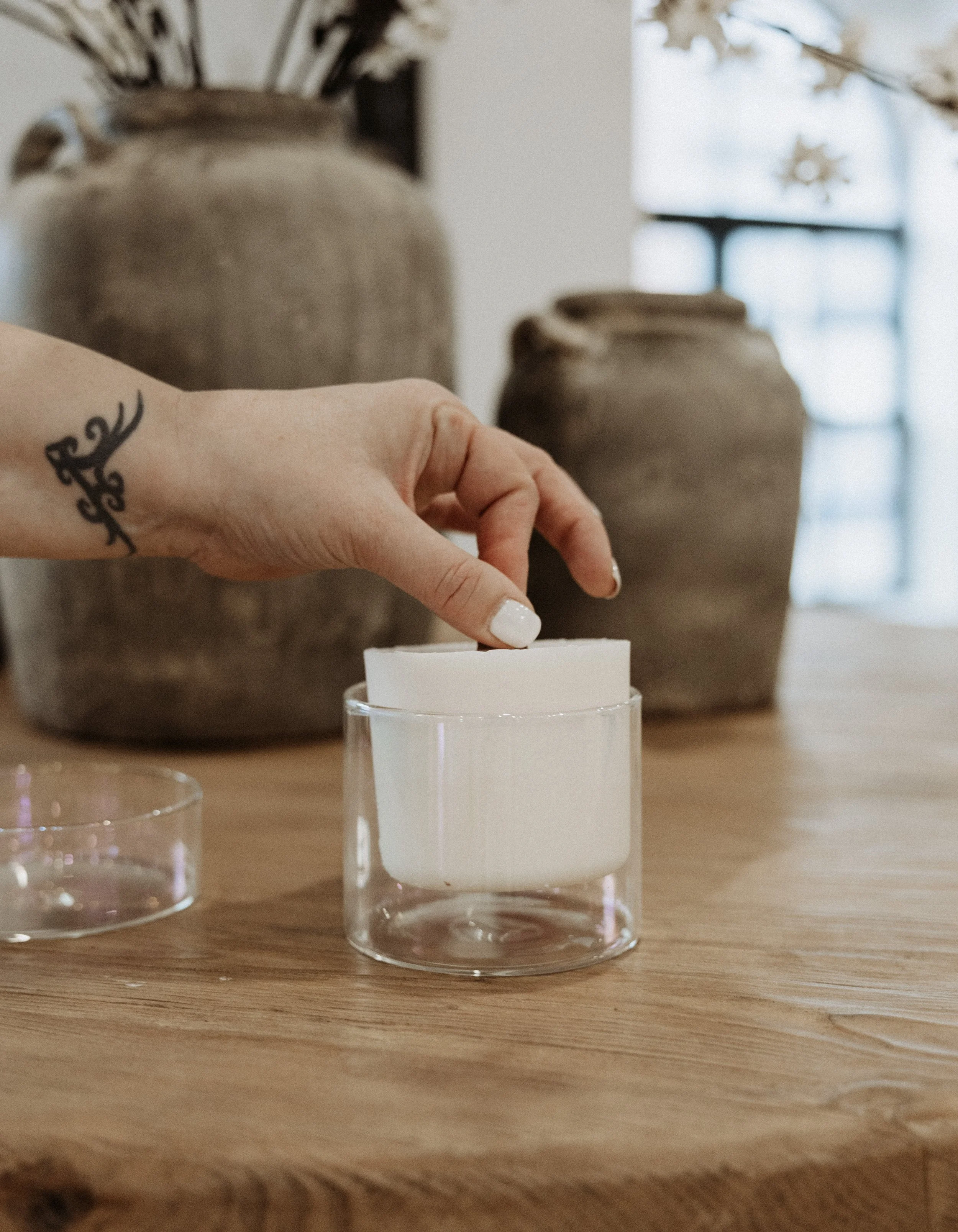
Silicone is a manufactured polymer. It begins with mineral-derived silicon and chemical processing; it is not simply sand in a softer form. Production requires energy and other inputs. [15]
Its flexibility and durability can be useful in a refill system. A reusable liner can allow spent wax to be released without repeatedly scraping the decorative vessel. If the liner remains functional across many candles, that repeated use is a real benefit.
The difficult part is its eventual disposal. A silicone liner is not a household-compostable item and does not belong in ordinary household packaging recycling. Silicone can undergo environmental degradation, but researchers note that little is known about the degradation rates of solid silicone elastomers. “It never breaks down” is too absolute; “it has a difficult end-of-life pathway” is more defensible. Specialist recycling technologies exist, but technical recyclability and a convenient collection route for a used candle liner are different things. [16, 17, 21]
For example, Canada’s free Ziploc Endurables silicone recycling programme accepts that brand’s pouches and containers. It does not accept an unrelated candle liner. A recycling programme existing somewhere is not the same as one being available for the product in your hand. [17]
Still, difficult disposal does not automatically make silicone the worse option. A liner used for years may avoid enough replacement containers to offer an advantage. We would need its actual lifespan, production information and a comparable glass system to determine that.
Durability is useful. It is also the reason end-of-life questions deserve an answer.
Three ways to refill a candle
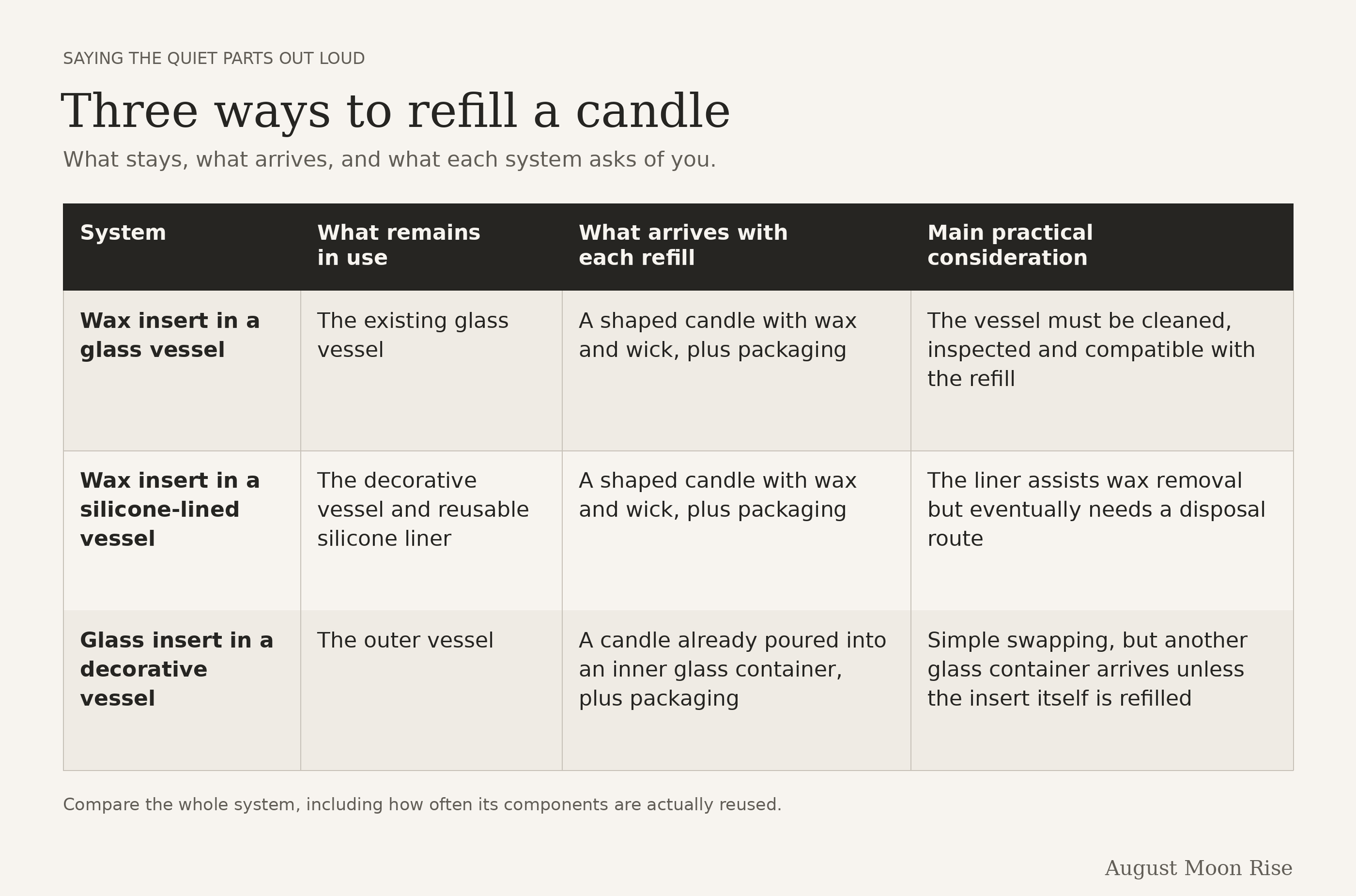
A wax insert makes sense for someone who wants to keep a suitable vessel and avoid receiving another container. Our refills arrive ready to drop into the compatible vessel you already own. Cleaning and inspection remain part of that process.
A silicone-lined system may suit someone who values easy wax removal and intends to keep the same decorative vessel and liner through many refills. By Two Fields, for example, describes a reusable silicone liner receiving fresh wax blocks. The liner is retained rather than discarded with each candle. [18]
A glass-insert system may suit someone who wants straightforward replacement or scent changes while keeping an outer vessel. The inner glass holds the candle separately. A replacement glass container arrives with each refill purchase, but that does not necessarily mean a newly manufactured jar is required each time.
Last Candle Co. offers a useful example. Its stone vessels receive glass candle inserts, and its return programme asks customers to collect five used inserts and contact the company for a return shipping label. The company says it washes and refills returned jars that arrive undamaged. [19]
Although the programme is called recycling, the process described is reuse: keeping the existing glass container in service rather than melting it down to make new glass.
That changes the comparison. A glass-insert system with a functioning return-and-reuse programme needs to be assessed differently from one in which every insert is discarded. It can keep both the decorative exterior and the inner glass in use. The practical questions become how many customers return their inserts, how many cycles the jars complete, and what transport, protective packaging and cleaning those returns require. The existence of a programme does not, by itself, tell us its environmental savings.
For a buyer, the choice may come down to how they prefer to refill: cleaning and inserting wax at home, releasing wax from a reusable liner, or collecting glass inserts for return. Ease of use matters when it helps a system stay in use.
There is no responsible environmental ranking based solely on those three descriptions. Vessel weight, recycled content, liner life, refill packaging, cleaning, transport and the number of actual uses all matter. These are considerations for a comparison, not a completed calculation.
Why refilling matters
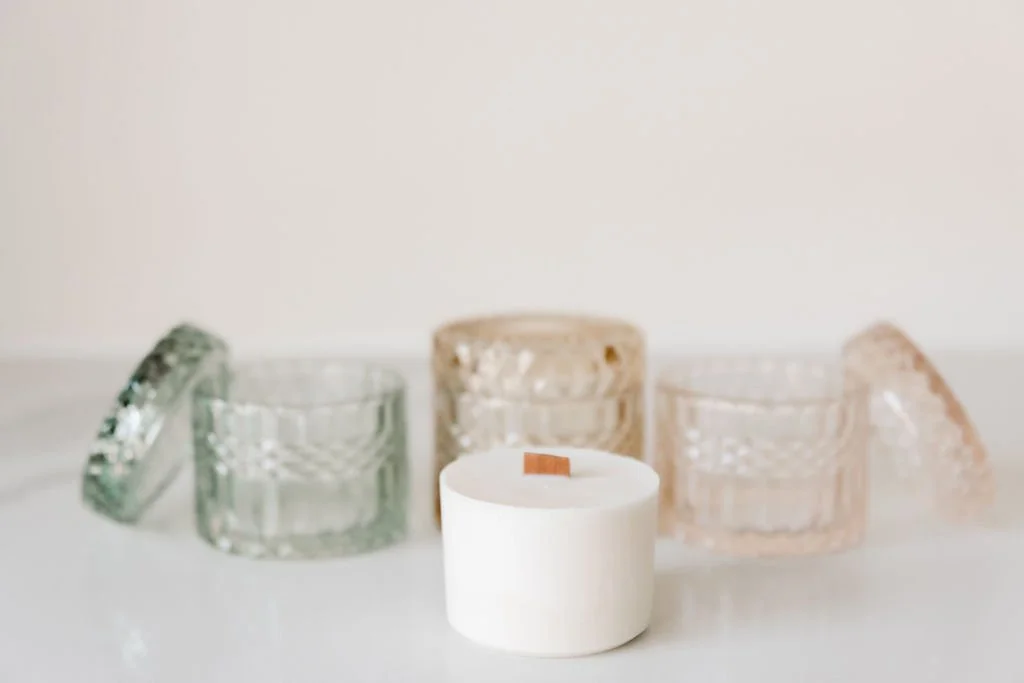
Refilling makes further use of a vessel that has already required resources to produce. Where it replaces the purchase of a new vessel, it avoids that additional container.
It does not remove the impacts of the new wax, wick, fragrance, packaging or delivery. Research on reusable glass considers washing and logistics alongside production when evaluating the whole system. [20]
You may have seen a claim that using a vessel four times cuts its packaging carbon footprint by 75 percent. One vessel used for four candles does mean three fewer vessels than four separately packaged candles. That is 75 percent fewer vessels, assuming comparable containers. It is not a measured 75 percent reduction in the candle’s carbon footprint, or even necessarily in all its packaging emissions.
Counting objects is useful. It is not the same exercise as counting emissions.
“Permanent” also describes a design intention. A refillable vessel only delivers repeated-use benefits when someone actually refills it. Availability, compatible sizes, appealing fragrances, price and ease of use all affect whether that happens.
Continued support belongs in that promise too. What happens if a maker changes the refill dimensions, retires the vessel or stops trading? Can a worn liner be replaced separately? Will compatible inserts still be available? These are useful questions for any system, including mine.
A vessel may remain a beautiful object after its refills disappear. That is different from remaining a functioning candle system. An alternative refill should not be assumed safe simply because it fits.
The refill system you will continue using has a practical advantage over one you admire once and leave empty.
Ontario recycling is more specific than a material name

As of October 2026, Ontario’s residential Blue Box system is operated under producer responsibility, with Circular Materials providing current collection information. Its accepted-materials guidance includes clear and coloured glass containers and directs residents to empty containers and remove glass-container lids. [21]
That does not mean every glass object belongs in the Blue Box. Glass dishes, drinking glasses, crystal, window glass and other household glass products are not equivalent to accepted container packaging. [22]
For candle vessels, confirm the specific item through the current Circular Materials guidance or your collection provider. Do not assume an unfamiliar glass composition, decorative coating or finish is accepted merely because the underlying material is glass. Remove wax and wick components before presenting an otherwise accepted vessel for recycling, and follow the collector’s preparation instructions.
Marble vessels and silicone liners are not listed as accepted household packaging materials in that guidance. Keep useful objects in service, seek a relevant specialist route where one is actually available, and obtain local disposal instructions when they are no longer usable. [21]
Do not pour wax down the drain. “Plant-based” does not make a fragranced candle suitable for a green bin. Check local instructions for residual wax and keep it out of glass recycling.
Recyclable is a material’s potential within a suitable system. Recycled is what actually happens after collection. The words deserve their own space.
The flame belongs in this conversation
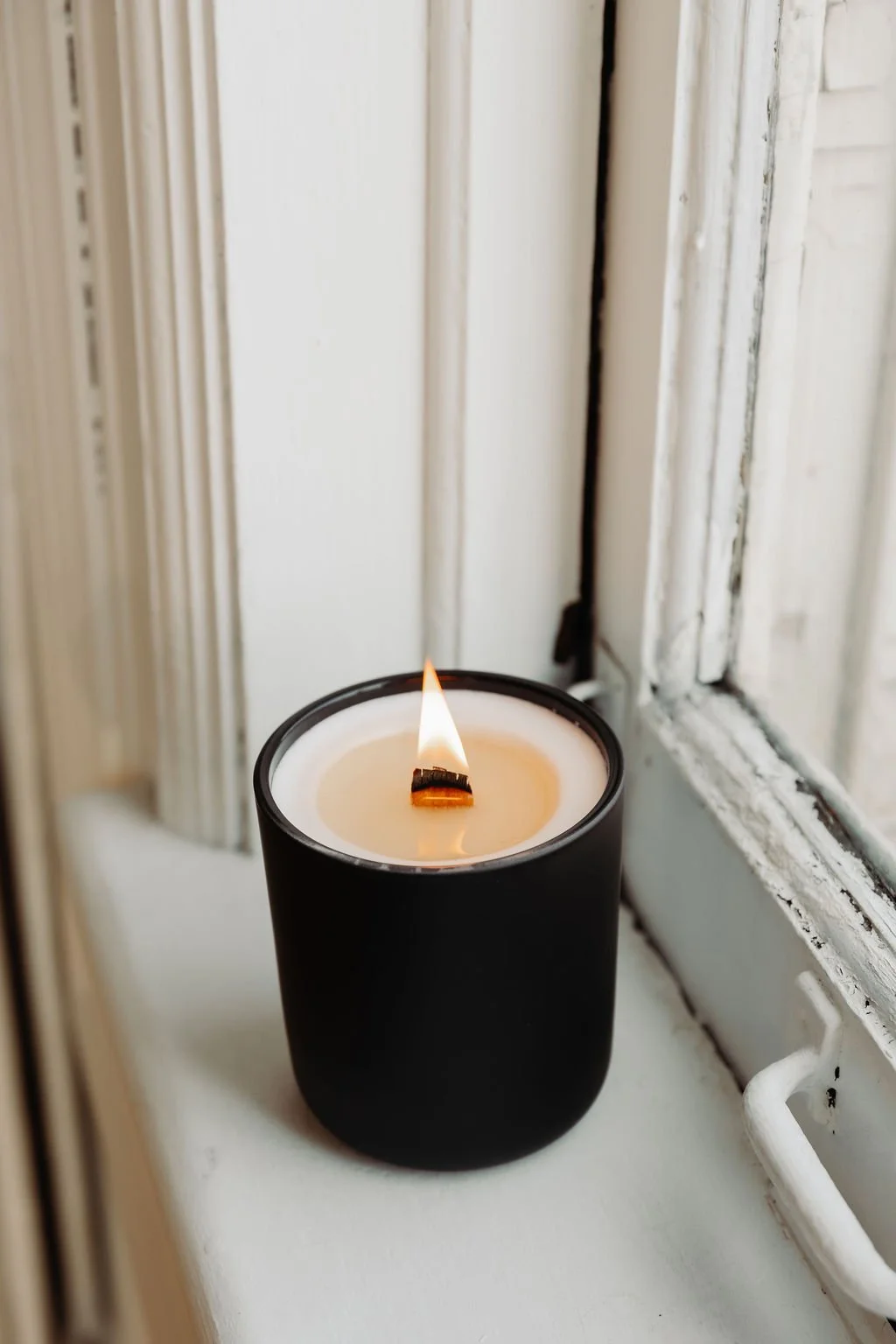
Burning a candle releases gases and particles. The amount and composition vary with the candle and burning conditions. Research has found that wax-and-wick combinations and disturbed, flickering flames affect emissions. [23]
That is not a reason to turn an environmental article into a claim that every scented candle is dangerous. It is a reason to avoid describing any flame as emission-free.
Follow the maker’s wick-trimming and burn-time instructions, avoid drafts and keep the room appropriately ventilated. Stop using a candle if it is behaving abnormally. Respect the specified stopping point rather than burning to the bottom to extract every last gram. [12]
Refilling also has limits. Use only the refill intended and tested for that system. Follow its inspection and replacement instructions. A cracked or chipped glass vessel has reached the end of its candle-burning role; indefinite reuse is not a virtue when it compromises safety.
How I approach continued use
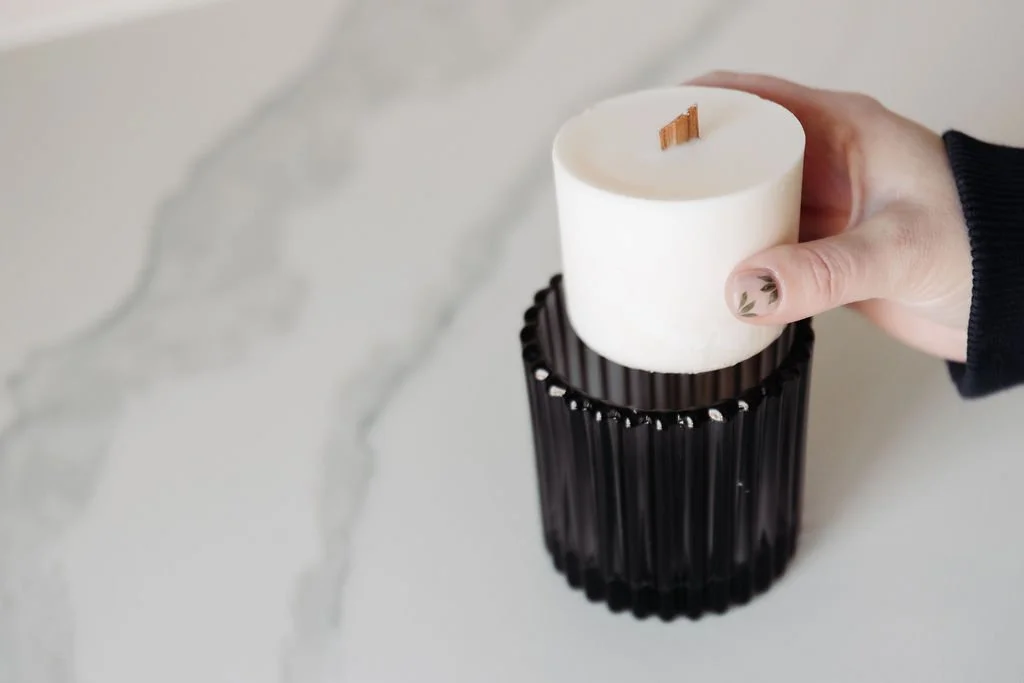
At August Moon Rise, I recommend a maximum of three refills after the original candle: four fills in total. Each fill may involve many separate burning sessions.
This is my precautionary policy for continued candle use, rather than a universal lifespan for glass. It should not be read as a guarantee that every vessel remains safe through four fills, or evidence that all glass becomes unsafe at a fifth. Condition and handling matter throughout.
Before every refill, clean and inspect the compatible vessel according to its care instructions. Retire it from candle use sooner if it is chipped, cracked, scratched or otherwise damaged. Sharp tools can scratch or weaken glass, so scraping it with a knife is not an appropriate way to prepare it for another candle. [12]
After the third refill, an intact vessel can move into a role without a flame: holding pens, brushes or small household objects, for example. Choose a use suited to its condition and finish; being a candle vessel does not establish that it is suitable for food.
I also do not collect used vessels to refill and resell. Once a vessel has left my care, I cannot verify its full history: how it has been burned, cleaned, stored or handled. I have chosen not to put returned glass back into circulation as another finished candle.
That is my operating decision. It does not establish that another maker’s return programme is unsafe. A return system needs its own procedures for assessing suitability; an at-home refill system needs clear care instructions and a customer willing to follow them. Keeping your own vessel does not remove the need to inspect it.
Refilling matters. Knowing when to end a vessel’s candle-burning role matters too.
The rest of the journey

Boxes, protective wrapping, labels, lids and delivery are part of the purchase too. A bare wax refill still needs protection. A heavy vessel still needs transport. Cleaning can use water, energy and consumables.
These are reasons to examine the actual journey: how much packaging is used, whether it is accepted where the customer lives, where materials originate and how orders reach people. A local maker may use imported components. A locally collected order may avoid a parcel shipment, but a dedicated long car journey changes that comparison.
No single detail settles the total footprint. Nor does that make the details pointless.
It means we should describe improvements at the scale we can support.
Buying less belongs here too
There is another quiet part worth saying, especially when you sell candles: a refill is still a purchase.
A refill can replace a new candle vessel. If it becomes an extra candle we would not otherwise have bought, that is a different comparison. Receiving less packaging is useful, but it does not make an additional purchase disappear from the picture.
I want refills to help you continue enjoying something you already chose. You do not need to buy more candles to justify owning a refillable vessel, or collect every fragrance to make good use of it.
Finish what you have, while respecting the candle’s safe stopping point. Choose fragrances you want to return to. Keep the vessel because you like living with it. Refill when you want another candle and the vessel remains suitable, within the maker’s limits.
A refillable system should make continued use easier. It does not need to become another obligation to keep shopping.
Choosing what we want to live with

We began with something we share: we love candles.
Understanding their materials gives us more ways to choose them thoughtfully. We might prefer a glass vessel we can refill, a marble piece we want to keep for years, a silicone liner that makes refilling easier, or a glass insert that suits how we use fragrance at home.
Those choices come with different benefits and responsibilities. It helps to know what stays, what gets replaced and what we will need to do when a component is no longer useful.
For my part, I want to make candles worth choosing and vessels worth keeping. I want refilling to be useful enough that it becomes something people actually do, within clear limits. Our glass vessels and drop-in wax refills offer one way to do that: another candle without another container arriving with each refill.
Our wax, fragrance, packaging and delivery still belong in the environmental picture. I think you deserve to know that too.
When any of us reads “better for the environment”, it is reasonable to pause and ask: compared with what? Over how many uses? What happens to each part when we are finished with it?
I would ask the same of anything I make.
We can enjoy candlelight and expect clear answers. We can love a beautiful vessel and take an interest in where it came from. We can acknowledge a drawback and still decide that something has a worthwhile place in our home.
We can also buy less. We can enjoy what is already on the shelf before deciding what belongs there next. I make candles, and I am comfortable saying that.
That is why I want to say the quiet parts out loud. So we can make good choices about something we already love.
Sources and scope

Research checked on 2 October 2026. This article explains materials and system trade-offs; it is not a lifecycle assessment of August Moon Rise or another brand. Studies of slabs, bottles and individual candle formulations inform specific points but do not establish a ranking of these candle systems. Recycling instructions should be checked again when needed.
1. RISE for Nordic Swan Ecolabel — Climate case candles, 2023. A specific stearin/paraffin comparison, not a soy candle or refill-system assessment.
2. Rezaei et al — Combustion characteristics of candles made from hydrogenated soybean oil.
3. NOPA — Soybean lifecycle assessment and processing inventories. Industry-commissioned research.
4. IUCN — Vegetable oils and biodiversity.
5. IUCN — Palm oil and biodiversity.
6. FAO — Beekeeping and sustainable livelihoods.
7. CandleScience — The difference between essential oils and fragrance oils. Supplier information about materials and performance, not a comparative environmental assessment.
8. US EPA — Agriculture and nonpoint source pollution.
9. FSC Canada — Certification.
10. US Department of Energy — Energy and environmental profile of the glass industry. Used for manufacturing processes, not current numerical emissions.
11. FEVE — Container glass lifecycle assessment. Industry-commissioned assessment.
12. Health Canada — Candle safety; National Candle Association — Expert tips.
13. Chatziandreou et al — Lifecycle assessment of marble processing in central Greece.
14. OEKOBAUDAT — Marble slab lifecycle dataset.
15. Bowling Green State University — Silicone recycling research.
16. Strategies to improve the sustainability of silicone polymers, Macromolecules, 2025; Closing the loop on silicone elastomers — lifecycle evaluation, Green Chemistry, 2026.
17. TerraCycle Canada — Ziploc Endurables silicone programme.
18. By Two Fields — Refillable stone candle system. Manufacturer description of operation, not independent verification of environmental claims.
19. Makesy — Translucent glass candle refill insert. Supplier example of this system.
20. Tua et al — Reusing glass bottles in Italy. Bottle research, not direct evidence of candle-refill savings.
21. Circular Materials — Ontario accepted materials and preparation; London collection information.
22. City of Toronto — Glass exclusions and recycling transition. Use current Circular Materials guidance for collection decisions.
23. Andersen et al — Candle emissions under stressed burning conditions. Controlled pillar-candle experiments, not testing of August Moon Rise products.